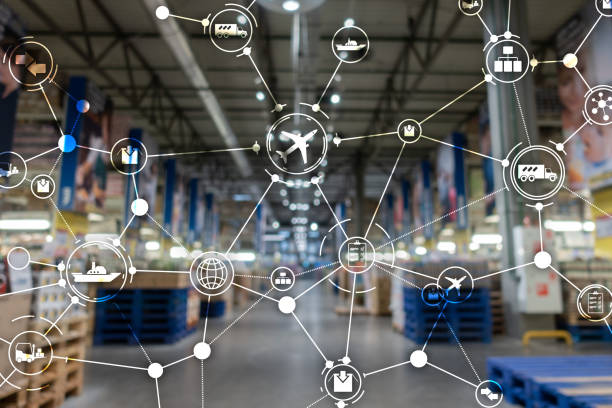
We are living in a time of extraordinary change. Internet and related technologies are bringing consumers and firms closer together than ever before. Many of the obstacles to efficient market performance have been removed.
This creates a huge amount of economic value. Like any major technological shift, the first and most noticeable effects are gradual–we discover easier and cheaper ways to do the things we already did. The changes become more dramatic over time as we learn new ways to do something and restructure our business. The current technological change will also have a dramatic impact on business transactions. It will take some time for the new technology to spread through the entire system. However, it is already reshaping supply chains, markets, industries, firms, and labor forces.
It is difficult for managers, due to the complexity of these changes, to plan appropriately. It is dangerous to navigate by looking at the road in front when the landscape is constantly changing. To understand the forces that are at play and their impact, you need to get higher.
It is not a new idea to improve supply management. Neither are the attempts made to achieve it. The vision is that information about consumer wants is quickly relayed to manufacturers, who then, using flexible manufacturing techniques and just-in-time techniques, quickly produce the product and deliver it to the customer. The Internet allows this vision to become more realistic by electronically connecting all relevant economic actors.
Dell Computers’ custom assembly and distribution model for personal computers is a great example of this. Dell’s strategy of selling directly to consumers has many advantages. It avoids the need to estimate demand. Dell can produce, order, and customize products to exactly what customers want, thereby eliminating finished goods inventories in the entire supply chain.
The Internet and the World Wide Web are ideal for this type of process. It is very valuable to be able to verify component compatibility live. The richness of Web content and the ease of a menu-driven user interface to provide the exact information required (for example, product attributes and comparisons) are also very valuable. The Internet store is also always open.
The Dell example is notable not because it’s a successful model but rather because there are so few others who have used the new technologies to restructure supply chains completely. This has been more of a revolution in distribution than manufacturing. Electronic commerce has largely been about changing the way existing goods and services are distributed to consumers rather than the production process.
As goods and services move from the basic input providers (raw material manufacturers, for instance) to the final consumers, supply chains add value. Information flows both up and down the supply chain. Information about the demand at each stage of the chain is passed up, while data on supply conditions, such as pricing, availability, time to manufacture, etc., is sent down. It is precise because this is an information-intensive process, and the Internet holds the potential to increase the amount of value created significantly.
Benetton is a company known for its supply chain coordination, which covers every aspect of clothing manufacturing and distribution, from styling to the sourcing of raw materials and the operation of retail stores. Benetton is a company that coordinates many of these steps, but it only performs a few. Benetton does not own any of the companies that make up its supply chain. This includes dyeing, which is essential to producing the Benetton signature colors. It also runs a large automated distribution facility in Italy and ensures that the designs are consistent with the Benetton look. It outsources manufacturing, independent agents handle sales, and the majority of stores are franchises. Benetton is a vertical architect that coordinates the operation of the entire chain.
In this form of supply-chain governance, the vertical architect can focus on its strengths and choose suppliers who are the best in class for the rest of the steps. In a globalized market, vertical architects can select suppliers from regions that are experts in each of the steps and have the lowest factor costs.
Coordination of the activities of successive firms in a chain can be costly and time-consuming. This includes restructuring information flows and incentives, as well as roles and responsibilities. They require multiple firms to adapt, as each has its organizational structure, routines, strategy, and objectives. It is well-known that change across firm boundaries is more difficult than it is within one company.
Any adaptations required by adjacent firms within the supply chain are unique to their relationship. After the partner firms invest in technology and processes that are compatible, switching to another partner will cost them. Many firms are reluctant to form these relationships because they fear being tied down by hitting costs. No wonder then that so much effort is put into developing technical solutions to lower switching costs.
XML, for example, provides templates that allow firms to share data while maintaining compatibility with legacy systems. However, each industry must agree on the industry-specific implementation of these templates. Several initiatives, both open and proprietary, are underway to develop standards. RosettaNet is an example of a non-profit organization that aims to establish XML standards in the electronics sector.
New technologies can improve supply chains incrementally and steadily but also radically restructure them. Electronic markets–Internet-based groups of buyers and suppliers within an industry, geographic region, or affinity group–have increased enormously over the past few years.
They are different in their forms and address other problems. Take Boeing and Airbus, both in the aerospace and automobile industries. Both share many suppliers. It is true within each sector as well as across industries. GM, Toyota, and Boeing are all common suppliers of auto parts. However, the suppliers that GM, Boeing, and Toyota share tend to sell items such as paper, pens, and computers.
A second distinction that can be made in relation to industry or inter-industry market is whether or not the intermediary facilitates transactions or merely provides information for interaction. These intermediaries that facilitate transactions are the most important. Trading hubs such as these have the potential to be a huge source of value.