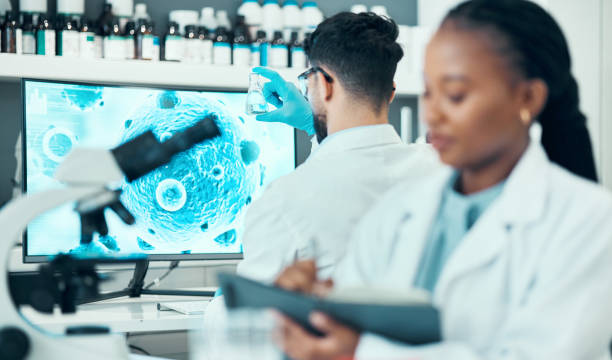
Visitors might mistake it for a movie set, but this unique research facility is located in the heartland industrial area of Oakland, Calif. The 37,000-square-foot Garfield Innovation Center opened in a new window and is run by Kaiser Permanente. It contains realistic operating rooms, hospital floors, and doctor’s offices but no actual patients. Kaiser Permanente uses this facility to test new ideas and concepts in a real-world setting.
Dr. Yan Chow, a physician-turned-administrator, oversees the center as head of Kaiser Permanente Information Technology’s Information & Advanced Technology Group. He is responsible for screening new technology for the Kaiser system’s nearly 9 million members. He recently spoke at the Stanford Graduate School of Business Healthcare Innovation Summit. He talked about the Garfield Center and medical technology innovations after his panel on “Rethinking Care Delivery.”
Kaiser’s Garfield Center is one of only a few similar facilities in the entire world. What is the Garfield Center?
We use it for testing things like technology and workflow. It’s also helped us design. The architects of our small retail “micro clinics,” for example, assumed that doctors would prefer to have their offices in the back, where they won’t be distracted. When we constructed the prototype and played out some role-playing situations, we found that doctors actually preferred their offices to be in the front where they could watch who came in and what was happening. They did not want to be alone. We built clinics in this way.
What about technology? What did you buy or not buy after trying it?
A mobile medication cart is one example. Nurses use it to distribute medicine to patients in a hospital. A manufacturer created a motorized trolley with a locked cabinet for medicine. You could load the cart once and then distribute it to a whole floor without having to return to the medication room. All the nurses asked for this cart. They loved it. We bought two units, and 20 nurses came in to test it. It didn’t even take them more than 5 or 10 minutes to realize that they didn’t care for it. It was heavy and difficult to move; you couldn’t leave it because it was full of medications, and if a doctor changed an order, then they would have to go back to the med room.
You may have gotten away with a lot by not purchasing more.
This story is often told to visitors at the Garfield Center. A hospital official was on a tour when he heard the story. His face instantly turned pale. Someone asked him to come aside; he looked like he had a heart attack. His hospital had recently purchased 3,000 units. Guess what? They were not being used for the same reasons that we discovered.
What is your overall opinion of the role that technology should have in medicine?
Evidence-based medicine has always been our focus. We now have evidence-based innovations. You have to show that your creation is cost-effective and solves the problem. This is our approach. We’ve seen over 1,500 startup ideas but have only implemented 10.
What are the mistakes that med-tech entrepreneurs make?
You need to be more than just a fan of technology. One of the most innovative startups I’ve seen in recent years worked with home health aides who help sick or elderly patients with their daily lives. These workers earn maybe $7 per hour and are employed by private agencies. After each visit, the workers write a report on paper. These reports are not read for at least three weeks.
This startup developed an iPad app that asked very simple questions like “Does this person have bedsores?” Doing so allowed low-level workers who were not educated to act as an early warning. This could have big results, like preventing expensive readmissions to hospitals. The health agencies are [incentivized] to offer this service because they will lose money if patients stay in the hospital without daily visits.
You mentioned that you would be interested in trying out the “Google glasses” during your remarks at the panel discussion. Were you being serious?
Yes. They’re interesting to us because we’re geeks. [Laughs.] We’ll be using them to create “augmented reality” apps, which will put information in front of healthcare providers.
How geeky is the Kaiser doctor for whom you purchase technology?
Some of them have even applied for the innovation grants we give out. Some of them even applied for our innovation grants. One of them created an SMS appointment reminder system years ago. A surgeon in orthopedics developed a registry of implanted devices to track them in case of recall.