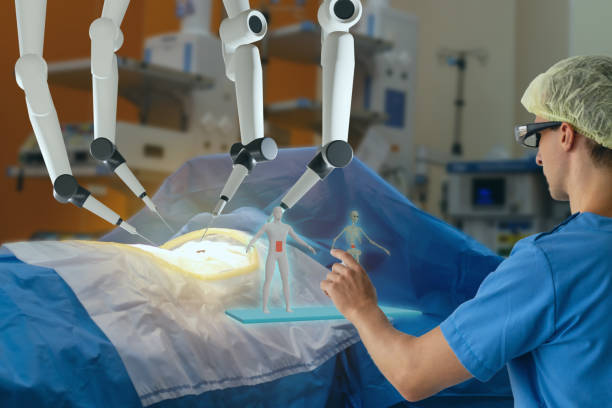
Robotic surgery is commonly associated with minimally invasive surgeries, which involve procedures that are performed through very small incisions. Sometimes, it’s used in traditional open surgery procedures.
A camera arm, a mechanical arm with tools attached and a motor to move the surgical instruments are the most common type of clinical robotic surgical systems. The surgeon controls the arms from a computer station beside the operating table. The console gives the surgeon a 3D magnified view of the operating site.
The first-ever clinical trial, led by scientists from University College London and the University of Sheffield, found that patients who undergo robot-assisted surgery for removal and reconstruction of bladder cancer can recover significantly faster and spend much less time in hospital.
The study was published in JAMA on May 15th. It was funded by The Urology Foundation and a grant from The Champniss Foundation. The research also revealed that robotic surgery reduced the risk of readmission by half (52%) and showed a fourfold (77%) decrease in the incidence of blood clots (deep-vein thrombus and pulmonary emboli), which are significant causes of morbidity and health decline.
Patients also experienced an improvement in their stamina, quality of life, and physical activity. This was measured using daily steps on a smartwatch.
Robot-assisted surgery is a different type of surgery than open surgery. This involves the surgeon performing surgery on the patient, making large incisions in their skin and muscles. Robot-assisted surgeries allow doctors to remotely control less invasive tools via a console and 3D views. It is currently offered in a handful of UK hospitals.
The researchers’ findings prove the patient benefits of robot-assisted surgical procedures. They are now asking the National Institute of Clinical Excellence to make it available in the UK as a clinical option for all major abdominal surgeries, including colorectal and gynaecological.
Professor John Kelly, a Professor of Uro-Oncology in UCL’s Division of Surgery & Interventional Science and consultant surgeon at University College London Hospitals, was named the Chief Investigator. He stated that although robot-assisted surgeries are becoming more common, no clinical evaluation has significantly improved patients’ recovery. This study was designed to determine if robot-assisted surgical procedures, compared with open surgery, resulting in fewer hospital readmissions and better quality of life.
“Unexpectedly, we found a striking decrease in blood clots among patients undergoing robotic surgery. This indicates that the surgery is safe, and patients can benefit from fewer complications, early mobilization, and a faster return to normal living.
Professor James Catto (Professor of Urological Surgery, Department of Oncology and Metabolism at the University of Sheffield) was the Chief Investigator. He said that this is an important discovery. This advanced surgery reduces hospital stay time and speeds up recovery. This will ultimately reduce the NHS bed pressures and allow patients to return home faster. Improved mobility and less time in bed mean that there are fewer complications.
“The study also indicates future trends in healthcare. We may soon be able to monitor the recovery process after discharge to identify any problems. It’s possible to track walking levels and identify those who require a visit from a district nurse or a check-up at the hospital sooner.
“Previous robotic surgery trials have been focused on long-term outcomes. They showed similar rates of cancer cure and long-term recovery. They have not examined the differences in the weeks and days following surgery.
NICE still recommends open surgery for complex and difficult surgeries. However, the research team believes this could change.
Professor Kelly said: “In light of the positive findings, it is now being challenged that open surgery is the gold standard in major surgeries.
“We hope all patients who need major abdominal surgery can now have robotic surgery.”
Rebecca Porta, The Urology Foundation CEO, stated that the Foundation’s mission was to save lives and alleviate suffering from urological cancers. This is achieved by investing in cutting-edge research and leading education. We also support training health care professionals so that fewer lives are lost.
“We are proud that we have been part of the significant step-change in the care and treatment of urology patients from our inception 27 year ago. The outcomes of this trial will greatly improve the care and treatment of bladder cancer patients.”
Bladder cancer occurs when abnormal tissue grows in the bladder lining. Sometimes, the tumour can spread to the bladder muscle and cause secondary cancer. In the UK, bladder cancer affects approximately 10,000 people each year. There are over 3,000 bladder reconstructions and removals. It is the most costly cancer to treat.
Trial findings
Three38 patients with non-metastatic bladder carcinoma were randomly divided into two groups. One hundred sixty-nine had robot-assisted cystectomy (bladder extraction) and intracorporeal reconstruction (taking a portion of the bowel to create a new bladder). One hundred sixty-nine had open radical cystectomy.
The primary end-point of the trial was how long the patients stayed in the hospital after surgery. The robot-assisted group spent an average of eight days in the hospital, compared with the open surgery group’s 10 days. This is a 20% decrease. Significantly, readmission to the hospital within 90-days of surgery was 21% for robot-assisted vs 32% for open.
Additional 20 secondary outcomes were evaluated at 90, six-, and twelve months after surgery. These included blood clots, wound complications, blood clot prevalence and quality of life. Robot-assisted surgery improved all secondary outcomes or, if it was not, made them almost as good as open surgery.
This study and other studies have shown that robot-assisted and open surgery are equally effective in reducing cancer recurrences and prolonging survival.
Next steps
To determine the quality-adjusted lifetime (QALY), the research team will conduct a health economic analysis. This includes the impact on the quantity and quality of life.
Patient case studies
John Hammond, 75 years old, of Doncaster, said that he had left his symptoms untreated and discovered that he had a bladder tumour. Professor Catto was kind enough to help me. After being offered several options, I decided to have my bladder removed and place a stoma.
“I had the surgery in August 2019. I was aware that robotic surgery was being trialled and wanted to participate. It was a pleasure to be able to help anyone else with this type of surgery in the future. The operation went well, and everyone was very supportive.
“Amazingly, I was walking the next morning and had made great strides, increasing my ability to walk each day. I felt no pain and had to adapt to the stoma bags. I am fully recovered and felt confident that I was in good hands. I was able to return home within five days of surgery. Professor Catto and his staff were incredibly helpful in ensuring that I didn’t stay in the hospital longer than needed.
Frances Christensen Essendon from Hertfordshire said that she was diagnosed with bladder cancer. After undergoing chemotherapy, it was recommended that my bladder be removed. Professor John Kelly performed robotic surgery on me to remove my native bladder. A new bladder was made from the bowel. The surgery was successful, and I was soon walking again. After the surgery in April, I was back at work in June and at the gym in the middle. Prof Kelly and his staff have helped me to live a normal active lifestyle, and I am forever grateful for their support.”