Renewable bio cement is made entirely from waste materials.
Cement is a binding substance used in construction to harden, set, and stick to other materials. Concrete is made when cement and sand are mixed with gravel. Concrete can be classified as either hydraulic or non-hydraulic. Non-hydraulic cement will not be set when there is water, while hydraulic cement requires a chemical reaction between dry material and water.
Nanyang Technological University Singapore (NTU Singapore) has discovered a way to make cement out of waste. This makes it a more sustainable alternative to traditional cement.
Bio cement, a type of renewable cement, uses bacteria to produce a hardening reaction that binds the soil into a solid block.
NTU scientists have created bio cement using two common waste materials, industrial carbide sludge (from mammalian urine) and urea (from industrial carbide sludge).
The interaction of calcium ions and urea in industrial carbide waste sludge led to a new method for creating a precipitate or hard solid. This reaction in soil results in a residue that binds soil particles together, fills in gaps between them and creates a compact mass. This results in a bio cement block which is stronger, more durable, and less porous.
Professor Chu Jian, Chair of the School of Civil and Environmental Engineering, demonstrated in a proof of concept research paper published in the Journal of Environmental Chemical Engineering on February 22nd 2022, that their bio cement could be a cost-effective and sustainable method of soil improvement. This includes strengthening the ground for construction or excavation, controlling desert erosion or building freshwater reservoirs along beaches or in the desert.
It can seal cracks in rocks for seepage control or repair and touch up monuments such as rock carvings and statues.
Prof Chu, Director of NTU’s Centre for Urban Solutions, stated that bio cement is a renewable and sustainable alternative to traditional cement. He believes it can be used for ground treatment projects. Bio cement is made more sustainable by using two types of waste materials as raw materials. It will make bio cement more affordable and reduce waste disposal costs.
NTU scientists’ research supports NTU 2025 strategic plans. This plan aims to address some of humanity’s greatest challenges, including mitigating the human impact on the planet through research and development in sustainability.
Bio cement: Simple recipe using urine, bacteria and Calcium
Bio cement production is more energy-efficient and produces less carbon than traditional cement production methods.
NTU’s cement is made from two types of waste materials: industrial carbide, the waste material used in the production of Acetylene Gas and sourced from Singapore factories, and urea found within the urine.
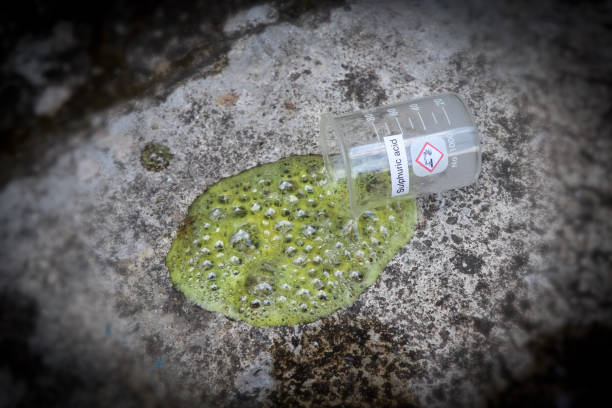
The team first treats the carbide sludge using acid to make soluble Calcium. To cement the solution, urea is added to the soluble Calcium. The team then adds to this cementation solution. The culture bacteria then break down the urea to create carbonate ions.
These ions react with the calcium ions to form calcium carbonate (MICP). This causes calcium carbonate, a hard, solid substance found naturally in limestone, chalk, and marble.
Dazu Rock Carvings in China provided the test specimen for a Buddha’s hand. It is a UNESCO World Heritage site. Dr Yang Yang performed the bio cement repair at Chongqing University in China. Bio cement is colourless and can be used to restore the original carving. Credit: Nanyang Technological University, Singapore
This reaction happens in soil or soil. The calcium carbonate generated bonds soil particles together to increase strength. It also fills pores between them to reduce water leakage through the material. This same process can be used to repair rock carvings or statues using rock joints.
Bio cement-reinforced soil has an unconfined compressive strength of up to 1.75 megapascals (MPa). This is more than soil treated with the same amount of cement.
The cement is therefore suitable for soil improvement projects, such as strengthening or reducing water seepage in construction or excavation or controlling beach erosion along coastlines.
Yang Yang Yang, who was a former NTU PhD student and research associate at the Centre for Urban Solutions, is the paper’s first author. He is currently a postdoctoral fellow at Chongqing University in China. Yang Yang said that calcium carbonate precipitation at different cementation levels strengthens soil or sand by slowly filling in the pores between the particles. Bio cement can also seal cracks and reduce water seepage in soil or rocks.
Alternative to cement?
Bio cement production is more sustainable and greener than traditional cement manufacturing methods.
“Cement-making involves the burning of raw materials at high temperatures above 1,000 degrees Celsius to make clinkers, which is the cement’s binding agent. Professor Chu said that this process creates a lot of carbon dioxide. Our bio cement can be made at room temperature, without burning, making it more energy-efficient, greener, and carbon neutral.
Dr Yang Yang stated that carbide sludge in Singapore is considered a waste material. It is, however, a good raw material for making cement. We can extract Calcium from carbide waste sludge and make it more sustainable than limestone, which must be mined from the mountain.