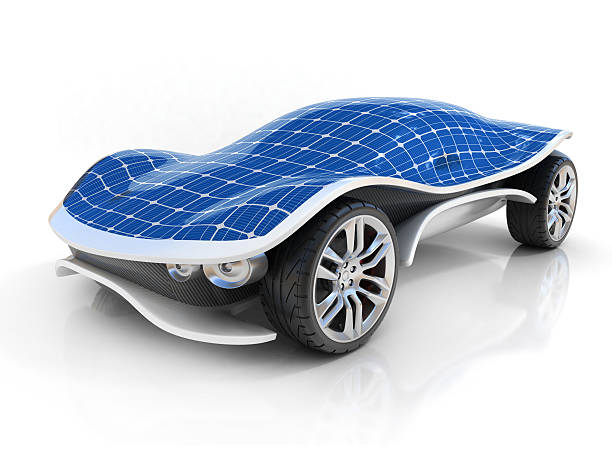
The Nimbus solar car, designed by students, covers 1,109 miles in five working days at an average speed of 38.4 miles per hour.
The MIT Solar Electric Vehicle Team won the 2021 American Solar Challenge (ASC), on August 7, after three years of hard work. They were in the Single Occupancy Vehicle category. Their solar car, Nimbus, was built entirely by students and traveled 1,109 miles at an average speed of 38.4 mph.
The ASC is held every two years and is a timed race. The race this year was determined by the distance covered. Each team took the same route from Independence, Missouri, to Las Vegas (New Mexico). Each team could add miles to their mileage if they had enough power. Nimbus beat the University of Kentucky by more than 100 miles.
Aditya Mehrotra (SEVT captain), a rising senior in computer science and electrical engineering, said it was still surreal. We were all hopeful, but I don’t think you ever go into a race like “We got this.” In this case, however, we were able to do very well. The car performed beautifully, but more importantly, the team did a great job, and we learned a lot.
Teamwork is the key to making dreams come true.
Two weeks before the ASC race, each solar car was tested in the Formula Sun Grand Prix at Heartland Motorsports Park, Topeka, Kansas. To qualify for ASC, cars had to pass a series of “scrutineering” challenges. Then, they could race on a track in the hopes of qualifying. Nimbus was second after completing 239 laps on the way in three days (equivalent to 597.5 miles).
Cameron Kokesh, a SEVT member and rising junior mechanical engineer, tied the Illinois State driver’s record for the fastest single lap around the track in three minutes and 19 seconds. She isn’t content to rest on her laurels, though. She smiles and says, “It would have been fun to beat that time at the next race.”
Nimbus’s performance in the Formula Sun Grand Prix, ASC, and ASC is a testament to the team’s ability to design and build superior solar vehicles and other skills, such as managing logistics, communication, teamwork, and communications. Mehrotra says, “It is a massive operation.” “It’s no race. We drive the car down the road during the race.
Nimbus travels with a fleet of seven vehicles crewed by approximately two dozen SEVT members. The scout vehicle monitors road conditions and is followed by the lead car, which oversees navigation. The caravan’s third member, Nimbus, is followed by a chase car. In this vehicle, the strategy team handles tasks such as monitoring telemetry data and calculating the power generated by solar panels and the remaining travel distance. They also set target speeds. The transport truck and trailer are at the rear, followed by a media car and Cupcake, which provides support vehicles with food, supplies, and camping gear.
The team spent three years designing, building, refining, and testing Nimbus before the event. The ASC was initially scheduled for 2020 but was delayed due to the COVID-19 epidemic. They spent hours working in the MIT Edgerton Center’s machine shop in Building N51. They drove the car around Boston, including Salem, Massachusetts, and Cape Cod. They traveled to Palmer Motorsports Park, Palmer, Massachusetts, to practice different components of the race. They did scrutineer tasks such as the figure eight and slalom tests and performed team operations training to maximize the caravan’s performance, along with the “shakedown.”
Mehrotra explained that shakedown is simply driving the car around the track. Then you can see what’s falling off, and then you can figure out what to fix. “Hopefully, nothing too serious falls off!”
The road ahead
Mehrotra officially resigned at the end of the race and gave SEVT’s reigns to the new leaders. Kotesh will be the team captain, and Sydney Kim, a rising sophomore ocean engineering major, will serve as vice president. They had time to reflect upon the win and plan for the future during the long journey back from the Midwest.
While Nimbus did a great job, there were some hiccups, mostly during scrutineering. The team was able to handle everything. The canopy latch wouldn’t always stay in place, so the clear acrylic bubble that covered the driver’s face would crack open. A slight spring adjustment and some tape worked. Nimbus also tended to skid when the brakes were pressed hard. The traction was improved by driver training and letting air out of the tires.
There were also unpredictable variables that were beyond the control of the team. Nimbus was forced to travel 15 miles an hour daily with the tiny sun. The Kansas State Police stopped the whole caravan. Mehrotra says, “They didn’t realize we were coming through.”
Kim believes that Nimbus’ reliability is one of the critical factors to the team’s success. “We never had wheels fall off the road. Things didn’t go wrong electrically or mechanically once the car was rolling. It’s also very efficient in terms of energy efficiency because it is lightweight and aerodynamic. It allows us to drive 40 mph on a sunny day. The battery is energy neutral — it stays the same charge as we go.
The 2022 ASC will be the next. This year, the team will concentrate on improving Nimbus to race again next summer. They also plan to build a car for the Multiple Occupancy Vehicles (MOV) class of the 2024 race, which the team has never attempted. Kokesh says, “It will take three years to build a quality car to compete.” It’s a reasonable transition period after the success of this race. So our team is excited about it.
Patrick McAtamney is the Edgerton Center technical instructor. He also works as a shop manager and helps with all student clubs and teams. These range from solar cars to Formula race cars to rockets. He was also a student at ASC and had great admiration for SEVT. It’s entirely student-run. They design and do the machining. People often tell me that I sometimes feel like my only job, other than making sure they have ten fingers when I leave the shop.”
SEVT faces another challenge before the school year starts: deciding where the trophy should be placed. McAtamney states, “It is huge.” It’s roughly the same size as the Stanley Cup!