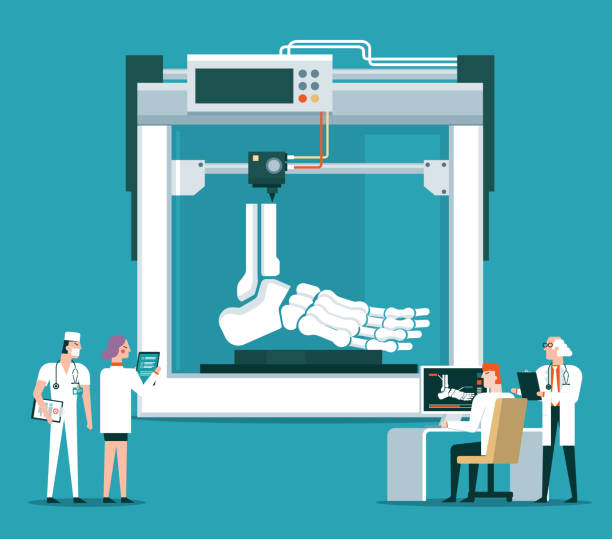
This artificial bone sample represents an important step in 3D bioprinting becoming a practical tool to provide emergency medical care in space. The ESA R&D initiative seeks to develop bioprinting technologies that can be used to give astronauts on extended missions ready access to the spare parts’ required for bone and skin grafts and even complete internal organs.
3D bioprinting could soon become practical on Earth and help meet the challenges of spaceflight. Astronauts in zero or low gravity lose bone density, for example, so fractures may be more likely in orbit or on ” data-gt-translate-attributes='[“attribute”:”data-cmtooltip”, “format”:”html”]’>Mars.
A graft of skin is often required to treat a burn. This can be done on Earth with full hospital treatment, but it’s more difficult in space as secondary damage may not heal quickly.
Bioprinting can be done on skin or bone using a nutrient rich ‘bio-ink,’ which is made from human blood plasma. This material can be obtained directly from astronauts. Working upside down in’minus 1g” gravity, has proven they can do it in space.
This bone sample is one of the first items on the 99 Objects of ESA ESTEC Website. It’s a collection of fascinating, sometimes surprising artifacts that tells the story of over 50 years of activity at ESA’s technical heart.